

Dr. Judith Curry came back on the show this week, and I didn’t waste her time with the philosophy. I brought numbers.
The $600 million question. In May, Ottawa and Alberta each committed up to $600 million toward carbon capture between 2030 and 2040, with Alberta’s industrial carbon price climbing to $130 a tonne by 2040. Curry does climate risk work for energy clients. I asked her if she’d put her own money in.
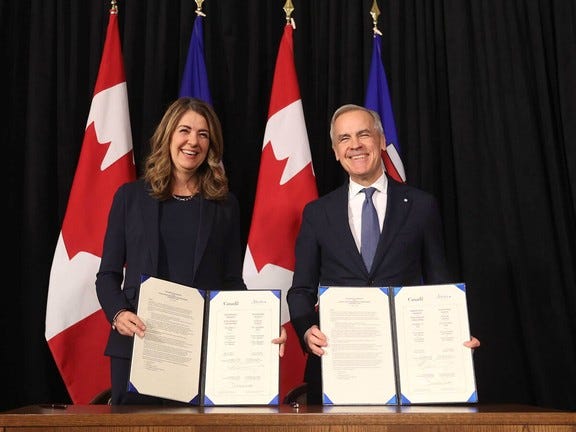
No. Worth developing the technology and keeping it in your back pocket, she said, but big engineered carbon capture won’t change the climate in any way. It’ll help bureaucrats check a box. There are no ancillary benefits — it’s a sunk cost with unintended environmental consequences waiting at scale. She also pointed out something that should embarrass Ottawa: the environmental activists don’t like it either, because it lets the petroleum companies off the hook. Her read is that it’s something cooked up by politicians and oil companies who want business as usual with a politically palatable wrapper.
The emissions cap. First compliance period 2030-2032, roughly 27% below 2026 attributed emissions. What does that do to global temperature by 2100? Pretty much nothing. Even taking the climate models at face value, one estimate had the US hitting net zero by 2050 and moving planetary warming by a few hundredths of a degree. Canada’s number would be smaller still.
Can Canada change the climate at all? There’s nothing Canada can do — with one grim exception she raised herself. Clear-cutting the entire boreal forest would genuinely shift the carbon balance and the planetary albedo. Somebody actually floated that, on the theory that snow cover reflects more sunlight than trees. Her verdict: absolutely no sense.
The grid at minus 35. We talked about net zero electricity mandates in a jurisdiction that runs weeks below minus 35. She walked through Texas, where the gas infrastructure froze, the wind wasn’t blowing, and they came very close to very big trouble. Canada’s pipelines are hardened for cold. American ones aren’t, which is why the US still leans on coal for peak demand. Her point: you can’t get rid of the coal until you harden the gas. People look for shortcuts and get caught short exactly when they need power most.

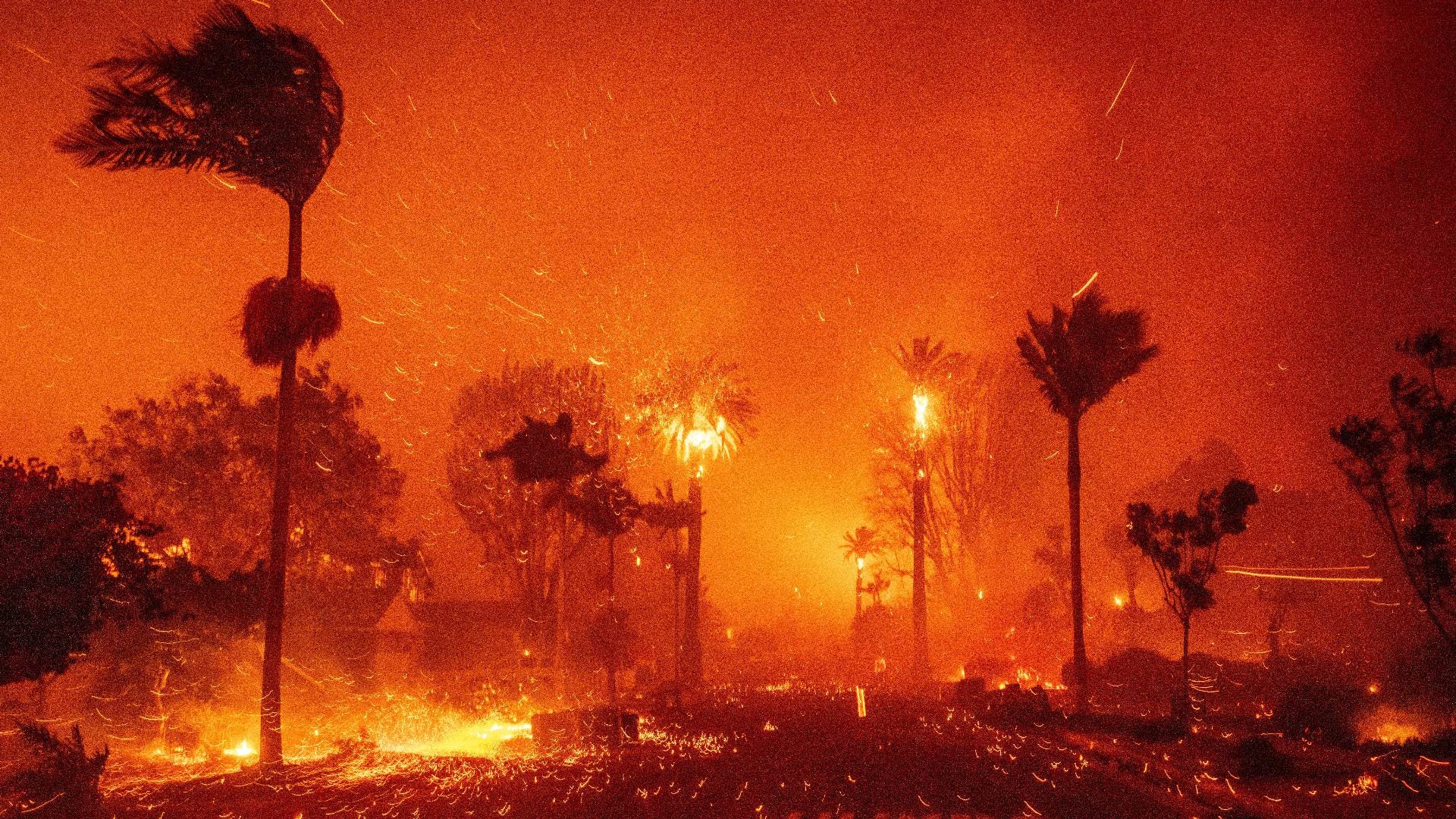
Your insurance bill. I asked what insurers are actually pricing. She isn’t seeing global warming in it. Her clients are asking about El Niño next spring and which regions to watch for tornadoes. What’s driving Canadian premiums, in her view, is fire — and building more expensive things in more exposed places. She pointed at California, where the state capped increases, the insurers left, and people were uninsured when the big fires came.
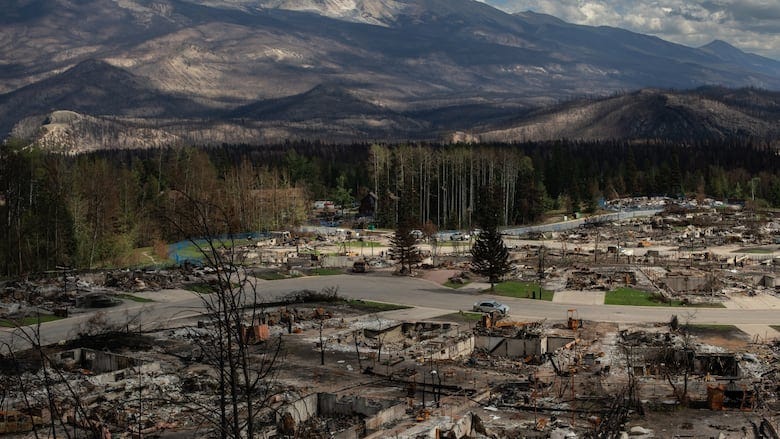
Jasper. Fuel load management failures conceded by Parks Canada and the Canadian Forest Service. The RAPTAC rappel program cut. Lookout towers gone. New water bombers arriving in 2031. I asked how much of Canadian wildfire loss is climate and how much is management. Natural variability plays a part — El Niño and La Niña years differ, and there are multidecadal regimes. The human-caused global warming component, she said, is negligible to non-existent. The management piece is the part you can actually impact. And blaming fires on global warming gives people an out from investing in figuring it out.
Attribution studies. Those papers that appear within days of a heat wave announcing it was made X times more likely — science or press release? Press release. She named the UK group led by Friederike Otto and their stated goal of building evidence for lawsuits against fossil fuel companies. Her words: voodoo science, very weakly supported.

And carbon itself. Carbon is necessary for life. Carbon dioxide is greening the planet — over 80% of the land surface is greener than it was decades ago. It probably contributes some percentage of observed warming; she won’t pretend to know how much. But the argument that warming is dangerous has never been made thoroughly, and it is most definitely not dangerous for Canada. We’d probably do better a little warmer.
Which is the part nobody in Ottawa will say out loud. Most of this country is uninhabited because it’s too cold.
Dr. Judith Curry held faculty positions at Colorado, Penn State and Purdue, chaired the School of Earth and Atmospheric Sciences at Georgia Tech, and retired as professor emerita in 2017 over politicized bias in climate science. She runs the Climate Forecast Applications Network and is on X at @CurryJA.
Watch the full conversation on YouTube or Rumble. Share it out — get more eyeballs on this information.
One month out: Capitalism & Morality Calgary, September 11-12.
Croatian Cultural Centre. I’m on the media panel — How to Beat Regime Media — and I’ll have a UTN merch table set up, so come find me. Roughly 26 speakers, including Frances Widdowson, Amy Eileen Hamm, Nadine Wellwood and James Ostrowski. VIP dinner Friday evening at 6:00 with Tamara Lich as guest of honour. Main program Saturday, check-in 8:00 am. Saturday night there’s a screening of Silencing Detective Grus with Helen Grus there in person.
Tickets: capitalismandmorality.com — use UTN10 for 10% off. Price steps up September 1, so don’t sit on it.
This episode is brought to you by Snoot! Spray.
Drug-free chlorine dioxide nasal cleanser. No steroids, no antihistamines, no neti pot on the bathroom counter. It rinses out what you’ve been breathing in — and if you live anywhere downwind of a Canadian summer, you know exactly what that is.

Let’s stay sane together. Keep your head on a swivel. — Bruce


